
"washed coffee Burundi"
400 article(s) found

Aroma saturated Burundi coffee varietyRegional flavor Fine coffee beans Description
Coffee tastes different, so you can't drink three or four cups in a row like tea or cola, and the amount of formal coffee cup is the most appropriate. Ordinary drink coffee to 80-100cc for the right amount, sometimes if you want to drink three or four cups in a row, then you have to dilute the concentration of coffee, or add a lot of milk, but still have to consider the physiological needs of the degree, to add and subtract coffee

The brand of bourbon coffee beans imported from Burundi Africa is good. Introduction of Pemba processing Plant in Cayanza Province.
Professional coffee knowledge exchange more coffee bean information please follow the coffee workshop (Wechat official account cafe_style) Burundian Coffee-Cayanza province Pemba processing plant sun. Burundi Kayanza Mpemba CWS Bourbon Natural Burundi is a small and beautiful landlocked country, located at the crossroads of Central Africa and East Africa is Africa's great Nile River.

What's the taste of Burundi in the sun? how to brew Burundian coffee?
For the exchange of professional baristas, please pay attention to the coffee workshop (Wechat official account cafe_style) Burundi (Burundi) has the most varied and successful coffee industry in the world, and has its own characteristics. Coffee in this country was introduced by Belgian colonists in 1930 and is now grown only on small farms. Unfortunately, many of these farms are connected to war-torn Rwanda.

Burundi Coffee Bean Flavor Description Taste Manor Area Treatment Grinding Scale Introduction
Burundi Coffee Bean Flavor Description Taste Estate Regional Treatment GrindingScale Introduction Sustainability is a common theme in the specialty coffee industry, yet most coffee companies still want to be able to get the best coffee at the lowest price, which is not sustainable behavior for local growers. What are our solutions to this? First, we need to understand
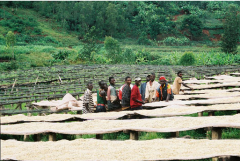
The difference between Burundi and Rwanda, Burundian Heart of Africa AA freshly roasted boutique coffee beans
For professional baristas, please follow the coffee workshop (official Wechat account cafe_style) Burundi is located on the south side of the equator in east-central Africa. It is bordered by Rwanda to the north, Tanzania to the east and south, Congo (Kinshasa) to the west, and Lake Tanganyika to the southwest. There are many plateaus and mountains in the territory, most of which are made up of the plateau on the east side of the East African Rift Valley. The average elevation of the whole country is 1600 meters, which is called the mountain country.

Introduction of Burundian boutique coffee bean flavor and taste manor producing area
There are many problems in the economic and social development of Burundi. Among them, first, due to the limited bride price in the country, the smooth implementation of the development plan for Burundi depends to a large extent on external support; second, due to the lack of high-quality personnel and necessary equipment, administrative efficiency is still underground; third, the market lacks transparency; fourth, there are not many commodities available for export; fifth, infrastructure.

Burundikayanza province, Burundi, sunburn bourbon boutique coffee beans, brand recommendation and village
Professional baristas Please follow Coffee Workshop (Wechat official account cafe_style) bourbon Coffee (French: Caf Bourbon) is a kind of coffee produced by Arabica coffee bourbon cultivation. Bourbon coffee was originally grown in Reunion, which was also known as le Bourbon Island before 1789. It was later occupied by France to work with the African continent and Latin
What are the similarities and differences in the flavor and taste of coffee between Ethiopia, Burundi and Rwanda?
For professional baristas, please follow the coffee workshop (official Wechat account cafe_style) Burundi is located on the south side of the equator in east-central Africa. It is bordered by Rwanda to the north, Tanzania to the east and south, Congo (Kinshasa) to the west, and Lake Tanganyika to the southwest. There are many plateaus and mountains in the territory, most of which are made up of the plateau on the east side of the East African Rift Valley. The average elevation of the whole country is 1600 meters, which is called the mountain country.

What are the characteristics of Burundian Ngozi NGOZI coffee? How do you drink Starbucks Burundian coffee?
Professional coffee knowledge exchange more information about coffee beans Please follow Coffee Workshop (Wechat official account cafe_style) Burundi may not be the leader in the global coffee market, but it is trying to improve its productivity. Coffee cultivation in Burundi is affected by the political and social problems encountered by its neighbour Congo. It mainly affects the future sustainability of the market. In a

Burundian coffee growing environment in African coffee producing area Burundian coffee beans are of low price and excellent quality.
Professional coffee knowledge exchange more coffee bean information please follow the coffee workshop (Wechat official account cafe_style) Burundi is located in the interior of East Africa, known as the Heart of Africa because of its geographical location. Through the introduction of the Belgian, Burundi began to grow coffee in 1930. The varieties are mostly bourbon varieties like neighboring Rwanda. Coffee grows between 1750 and 2000 meters above sea level.

Burundian Coffee Flavor with Prunus Fruit Flavor introduction to boutique coffee beans in manor production area
Formerly known as Urundi, Burundi formed a feudal kingdom in the 16th century. Since the middle of the 19th century, the forces of Britain, Germany and Belgium invaded. The long-ruled monarchy, which was conquered by Germany in 1890, listed it as the territory of German East Africa and fell under the control of the Belgian army in 1916. After World War I, the League of Nations merged Rwanda-

Burundian Coffee Guide-Burundian Coffee producing area introduction _ how to buy Burundian Coffee beans
Professional coffee knowledge exchange more coffee bean information Please follow Coffee Workshop (Wechat official account cafe_style) exquisite Burundian single source coffee with clean, delicate taste, rich body and acidity, according to cupping notes. Coffee reviews show that Burundian coffee has a sweet berry flavor, with floral and berry-like aromas. Region: Kayanza

The Historical Development of Burundian Coffee Bean Industry the Progress of Coffee Farmers and the Story of Excellence Cup
The competition will increase fame for a short time and bring about a new wave and rapid development and progress in the industry. No, in addition to the spiritual impact, there are substantial economic changes. For example, the excellent Cup held in Burundi in 2012 not only changed the fate of award-winning farmers, but also enhanced the status of Burundian coffee in the world. Held for the first time since 1999

Fragrant Burundian coffee flavor taste manor boutique coffee beans introduction
There are two major ethnic groups in Burundi, and only about 15 percent of the Tutsi have ruled the country since the 16th century, controlling the civilian population, which is mainly made up of Hutu, plus a very small number of indigenous Twa. This abnormal social structure in which ethnic minorities occupy a high position has buried the evil seed of national instability, and in 1

What is the best quality of Burundian coffee? the unique Burundian flavor is introduced.
Professional baristas please pay attention to the coffee workshop (Wechat official account cafe_style) Burundi (Burundi) is a small and beautiful landlocked country, located at the intersection of Central Africa and East African countries, the watershed between Africa's great Nile and Congo River, in Burundi you can enjoy the magnificent Lake Tanganyika, which forms its natural borders with Congo and Tanzania.

Grading, price, raw beans and roasting degree of boutique coffee beans grown in sunburn bourbon, Kayanza province, Burundi
Professional baristas Please pay attention to the Coffee Workshop (Wechat official account cafe_style) Burundian Coffee bears striking similarities with neighboring Rwanda, where coffee from the two countries is often confused. Burundian coffee is mainly grown in bourbon, and cherries are processed by traditional wet treatment. The main characteristics of its fine coffee are elegant sweetness and bright citrus aroma.

Description of Burundian Coffee Bean Flavor, characteristics of Grinding degree, quality and taste treatment method
Generally speaking, the aroma, caramel and color of Burundian coffee are produced in the caramelization reaction, as well as other aromatic substances such as maltol, Cyclotene, furan compounds and so on. These compounds can also be found in red wine, fruit juices, cream and other foods. But if caramelization is too much during baking, it's not a good thing.

Description of the taste of Burundian coffee bean sun-drying area
Following Kaibei (official Wechat account vdailycom) found that the Beautiful Cafe opened a small shop of its own Burundi is located on the south side of the equator in east-central Africa. It is bordered by Rwanda to the north, Tanzania to the east and south, Congo (Kinshasa) to the west, and Lake Tanganyika to the southwest. There are many plateaus and mountains in the territory, most of which are made up of the plateau on the east side of the East African Rift Valley, with an average elevation of 1600 meters above sea level.

How does Burundian coffee taste?
Burundi has the most diverse and successful coffee industry in the world, and has its own characteristics. Coffee in this country was introduced by Belgian colonists in 1930 and is now grown only on small farms. Unfortunately, many of these farms are on the border with war-torn Rwanda, putting pressure on coffee production. Coffee produced in Burundi.

Burundian Coffee Flavor and taste introduction to the characteristic varieties of high-quality coffee beans in the manor area
There are two major ethnic groups in Burundi, and only about 15 percent of the Tutsi have ruled the country since the 16th century, controlling the civilian population, which is mainly made up of Hutu, plus a very small number of indigenous Twa. This abnormal social structure in which ethnic minorities occupy a high position has buried the evil seed of national instability, and in 1